Stinson Aircraft on Floats
This page created
April 28, 2000
Updated
12/3/14
Click on the images for a
full-size view.
Stinsons make great float planes. Below
are some photos. As time permits, I'll add more photos. If
anyone can provide technical information (weights, performance, etc) for
float equipped Stinsons, I'll add that here as well. The best source
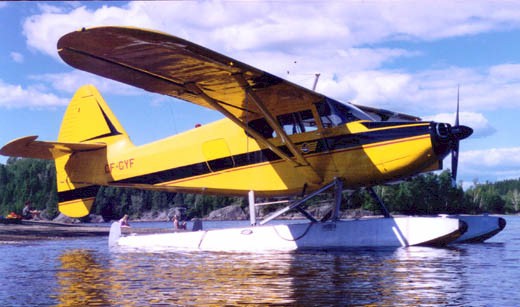
for technical information I have found is at David Miller's "Flightlines"
website. That's an early photo of David's 108-2 below. David's page of technical
information includes drawings and rigging information for Edo 2425 floats.
Follow this link:
http://members.shaw.ca/flightlines/
*************************************************************************
Edo 2425 floats were approved
for the Stinson 108 series at part of the original type certificate.
Other floats have been approved by STC, including Edo 2440's and Edo 2870's.
Most owners report that the
Stinson flies better on floats with more power. With 165 HP, the
Stinson makes a pretty good two-place float plane, but to carry a full
load, a conversion to a larger engine (F-220, O-470) is recommended.
Float
Fittings:
Univair sells the float plane fitting kit that complies with the original
type certificate. The part number is 108-3901001. It includes blueprints for the
installation. Installation requires welding. Cost in 2007 was about $780. The
kit does not contain struts or spreader bars - just the fuselage fittings.
Stinson rebuilder
Bob Reynolds offered additional details on the
float fittings in 2007. Bob is in Canada and holds the Canadian equivalent of
an A&P license. Here is Bob’s information on the float fittings:
“The float
fittings kit includes blanking plates to weld into the ends of the spar carry-thru’s
on the fuselage, so the wings have to come off for that. The primary purpose of
the blanking plates is to prevent water and salt spray from finding its way into
the spar carry thru. The front attachments weld to the fuselage structure at the
base of the front door post. The rear fittings weld to the fuselage structure at
the base of the vertical tube at the rear of the rear seat. There is also a
split tube reinforcement that welds over the existing horizontal tube running
between the two vertical tubes at the rear of the rear seat. The alignment of
the fittings is relatively critical as the angle to the float has to be fairly
accurate. It’s a fairly extensive job and best done with the fabric cut well
back from the weld areas, and with a large fire extinguisher nearby. The ideal
time to add float fittings is when you have the fabric off for a recover job.”

Stinson
108-3 on floats, restored by
Bob Reynolds. 180 HP Franklin, approved larger rear window modification.
Bob also has received approval for a number of other modifications, including an
new instrument panel and modified wing tips. Bob is based in the Penetang area
on the Southern Georgian Bay in Ontario. Almost all of Bob’s Stinson time is on
floats.
*************************************************************************
Photographs
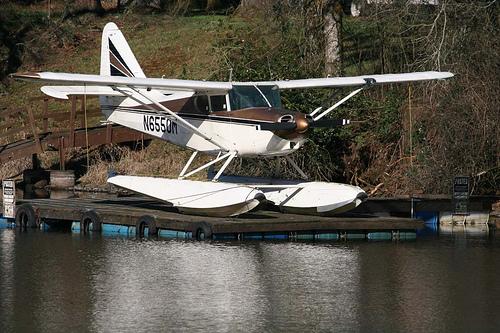
N6550M, a 108-3 "Super Stinson" on
floats, is owned by
Kenneth Weihl of Camas, Washington. Photo courtesy of
Hunter Decker.
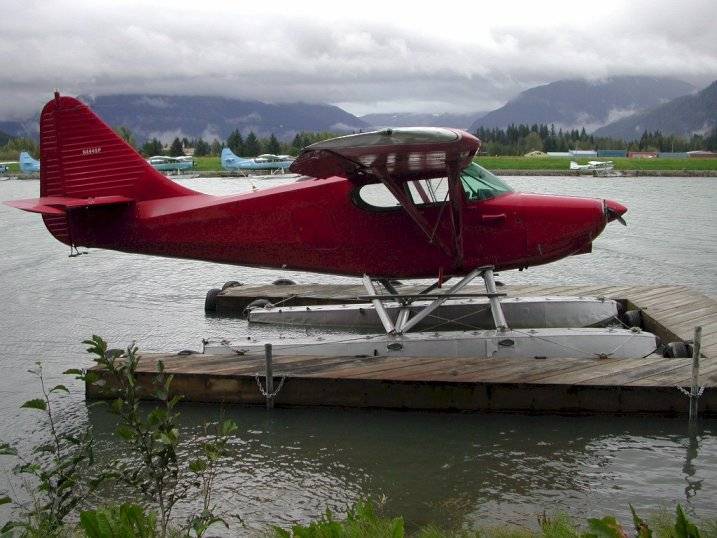
N4449P, a 108-3 on Edo 2425
floats with 165 HP Franklin. Aircraft owned by Sam Pekovich. Photo taken
by Charles Hauser in Juneau, Alaska.
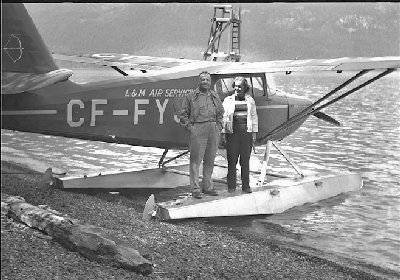
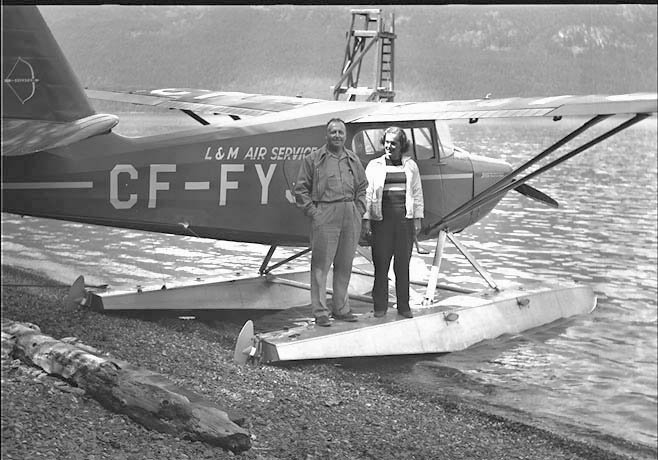
A vintage photo of a 108-1
or 108-2 on floats, taken between 1946 and 1952 at Okanagan Landing in
Vernon, British Columbia. Registration is CF-FYJ. Operated
by L&M Air Service Ltd. This plane is no longer on the Canadian
registry. Photo courtesy of Keith Nevile-Smith, whose grandfather,
Loyd Smith was a frequent user of L&M Air Service.
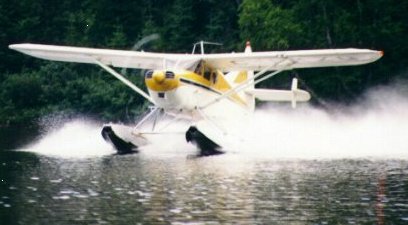
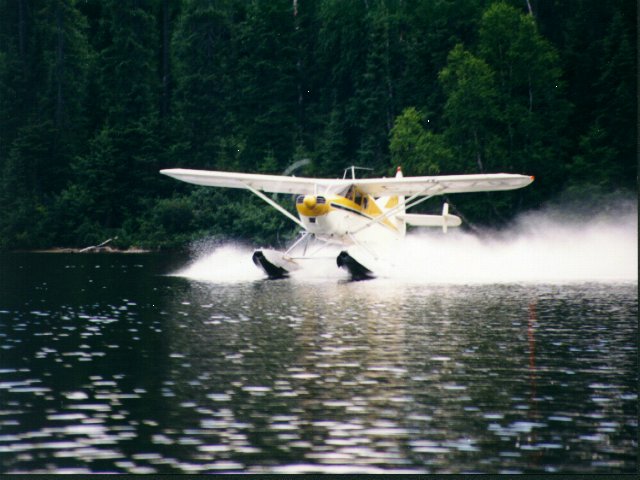
This 108-2 on floats, C-FKZQ,
is owned by Marty Boisvert and is based in Timmins, Ontario, Canada.
Power is from a 230 horsepower
Continental O-470.
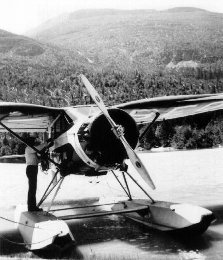 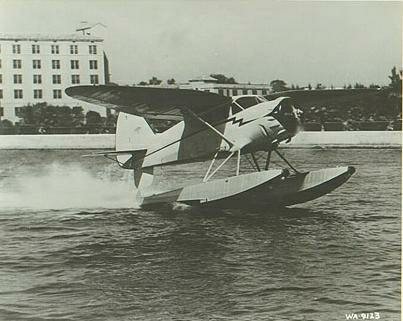
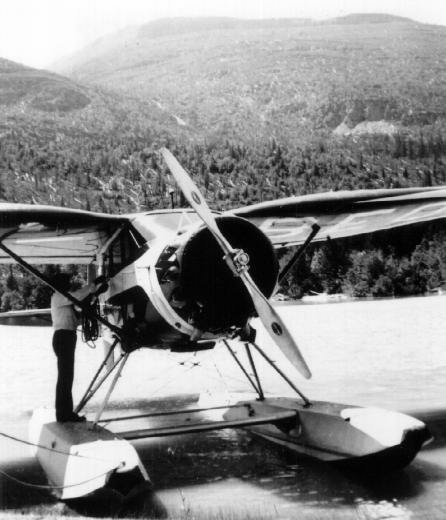
Two SR-9 Gullwings on floats.
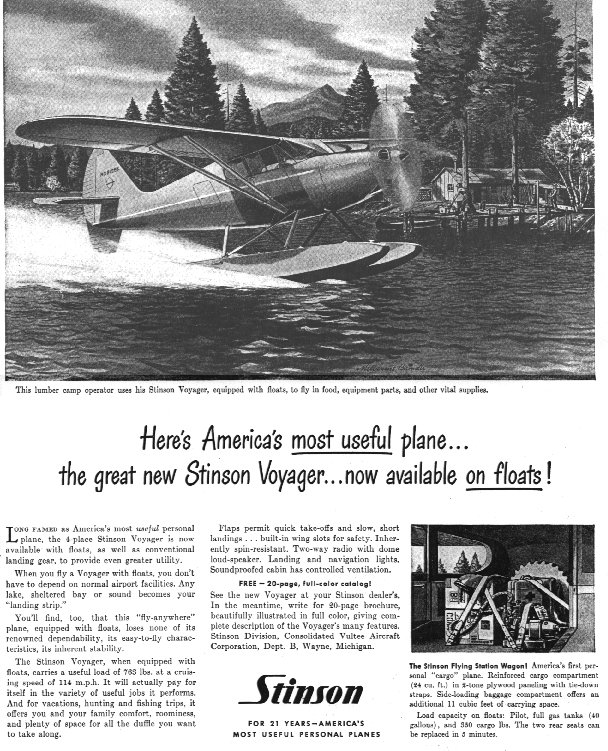
Stinson 108-2 Flying Station
wagon on floats from a vintage magazine advertisement, 1947.
Back
to the Hangar 9 Aeroworks Main Stinson Page
|